Flood water removal Indianapolis IN for flooded properties
Flood water removal Indianapolis IN helps homeowners, tenants, and business owners regain control after stormwater, a failed sump pump, or a burst pipe leaves standing water. We locate the water, choose pumping equipment for the depth and access, and check affected materials before drying begins. If you need floodwater extraction Indianapolis, call Water Pump Masters at 317-792-8700 and tell us where the water is and whether electricity is affected.
Initial water assessmentBulk water pumpingSurface extraction
Written service plansClear plan before work
Careful property protectionFloors, contents and finishes protected
One point of contactOne local contact
Prepared local crewsIndianapolis
What flood water removal includes
Flood water removal covers assessment of the flooded area, pumping of accessible standing water, surface extraction, and checks of affected materials. We explain what the water source and condition require, because stormwater and a clean supply-line leak do not always call for the same cleanup. Drying, disinfectant, removal of damaged finishes, plumbing repairs, and reconstruction are separate tasks when the property needs them; we identify those needs rather than treating pumping as a complete restoration.
Initial water assessment
We ask where the water came from, whether it is still entering, and how far it has spread. We check depth, access, and obvious safety concerns before selecting equipment. That assessment determines whether a submersible pump, extraction unit, or a staged combination is appropriate.
Bulk water pumping
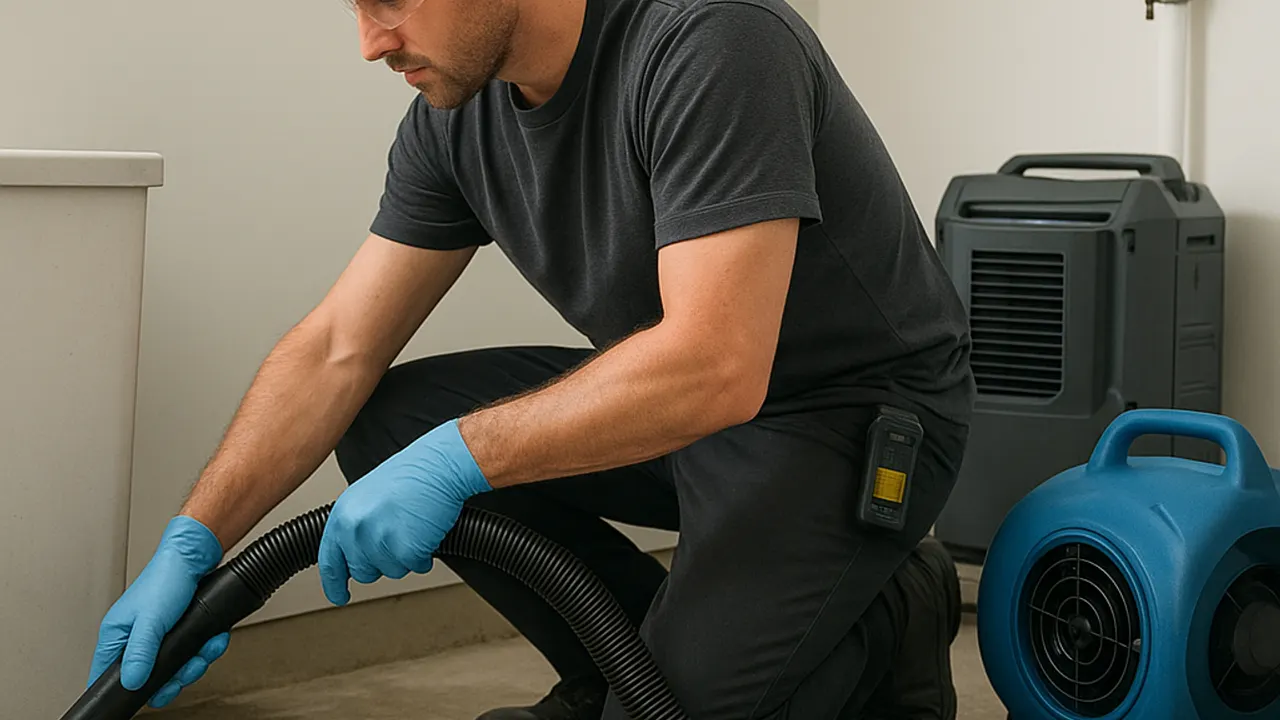
We pump accessible standing water from flooded floors and low areas using equipment matched to the depth and layout. We monitor the level as it falls and adjust the setup when needed, rather than relying on a single surface pass.
Surface extraction
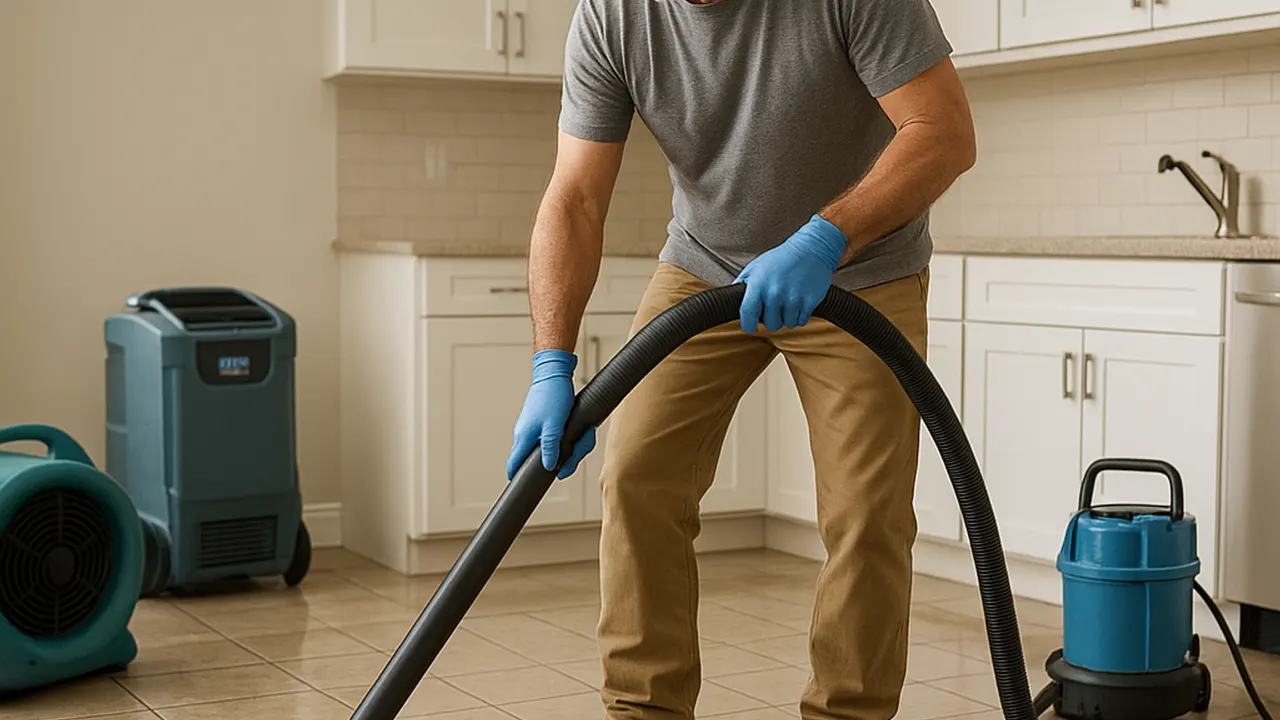
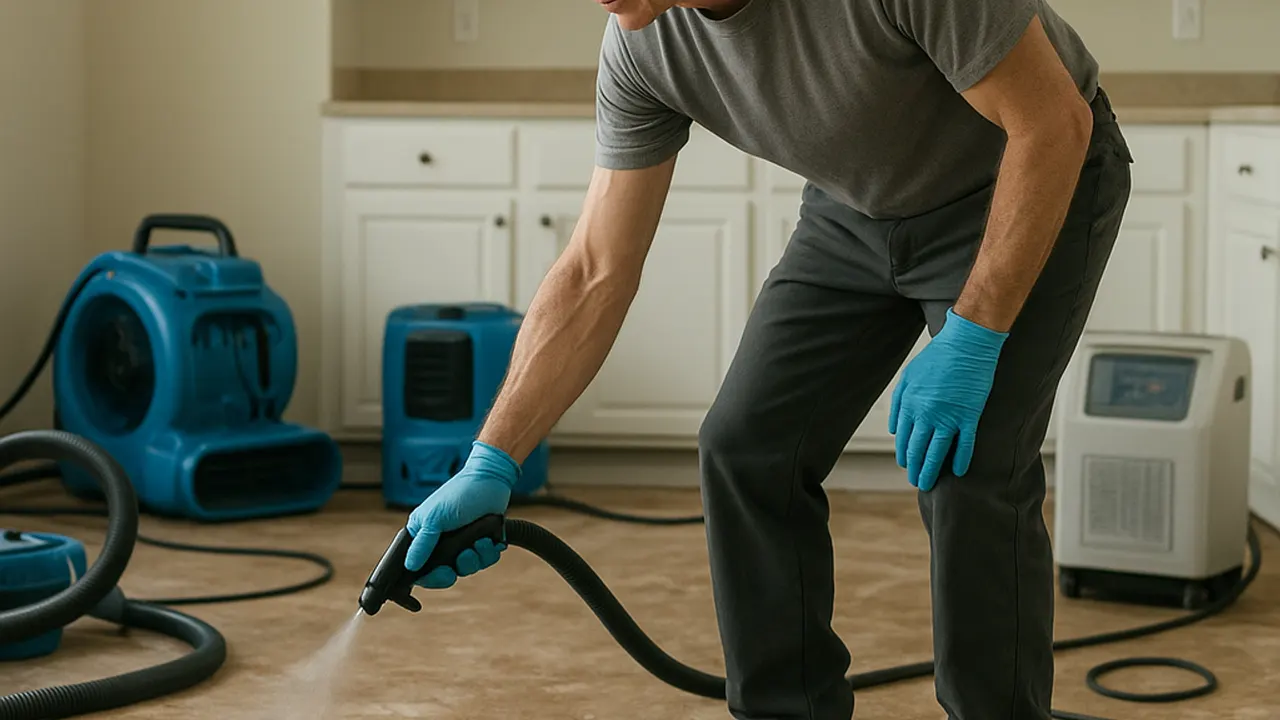
After bulk water is removed, we extract remaining water from reachable floor surfaces, carpet, and edges. This step reduces residual pooling but does not prove that carpet padding, insulation, or wall cavities are dry.
Material moisture checks
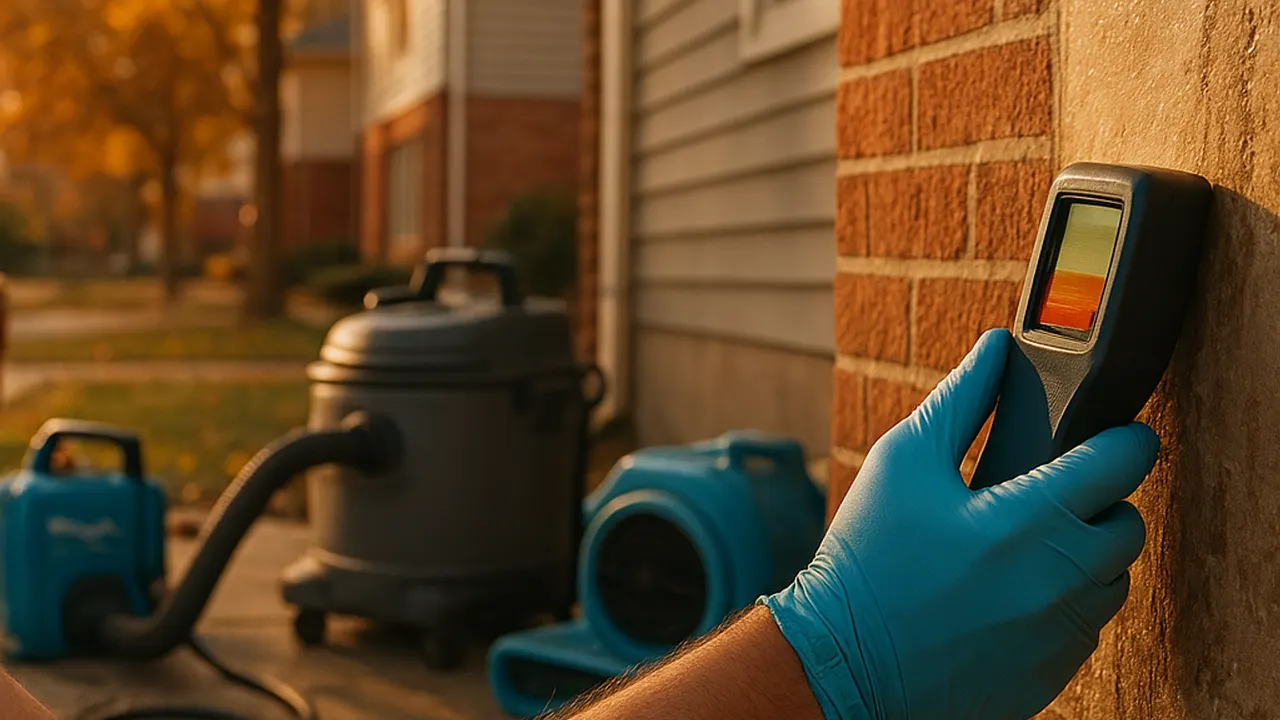
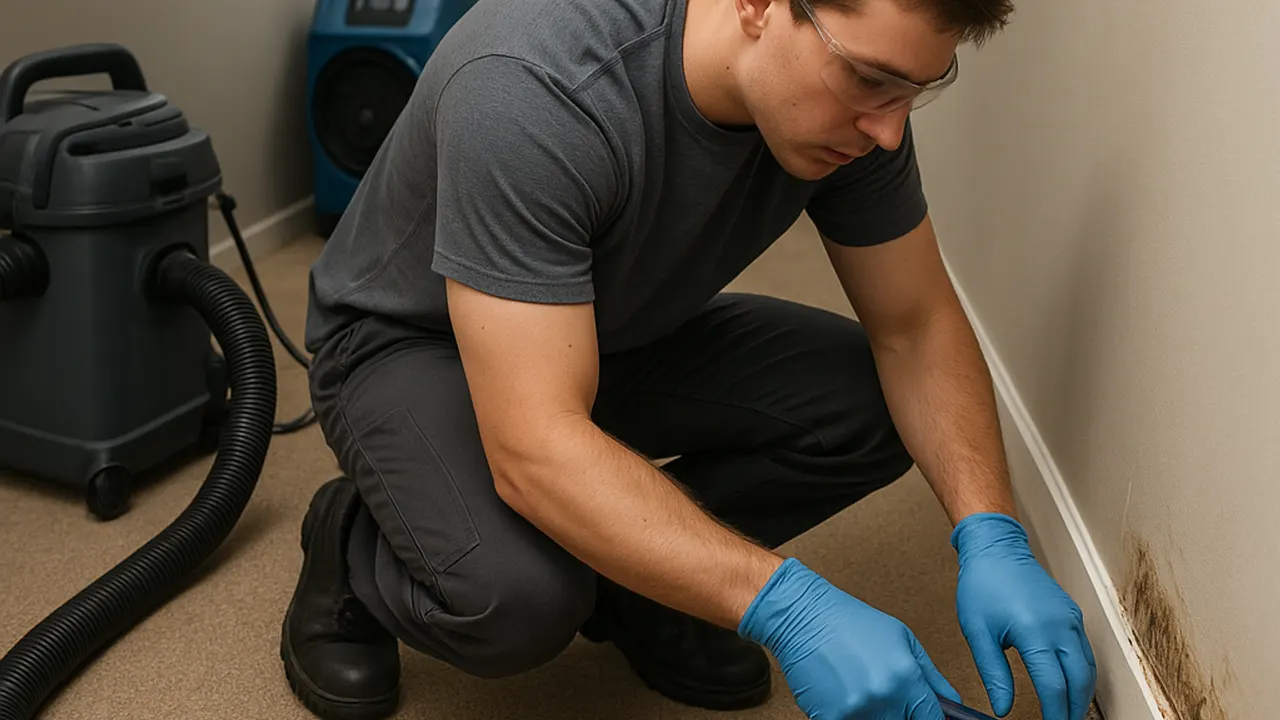
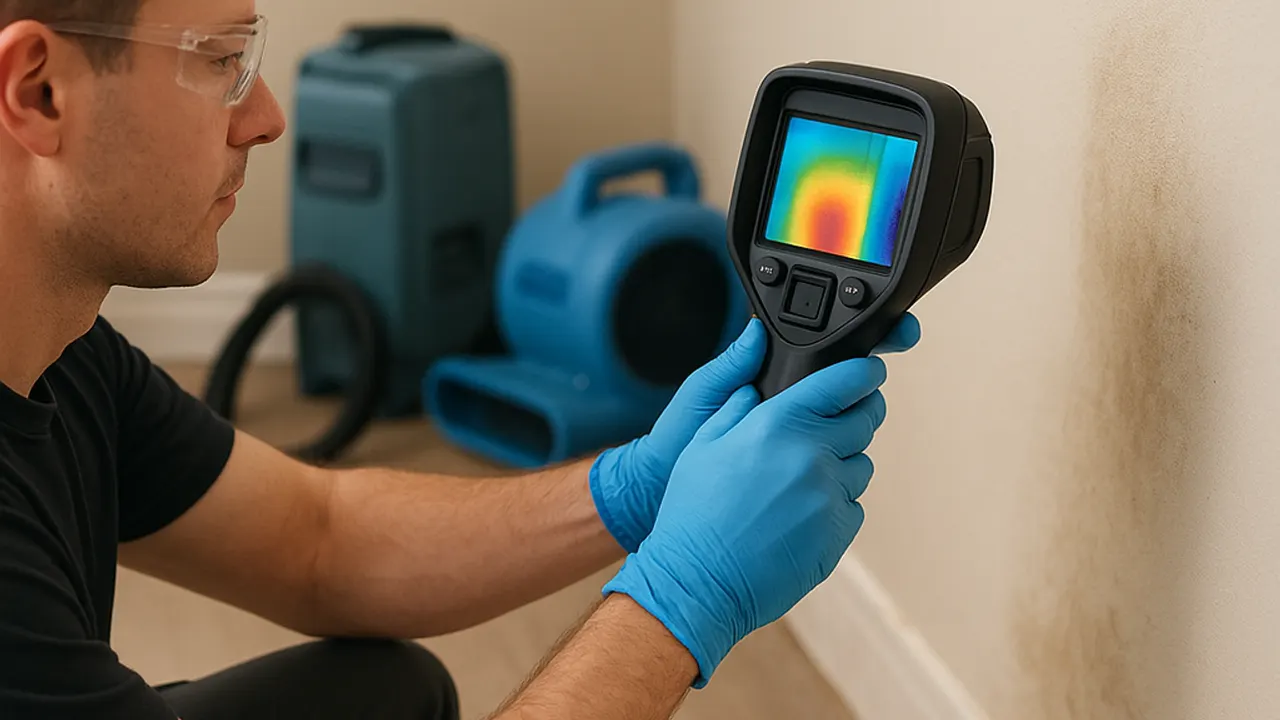
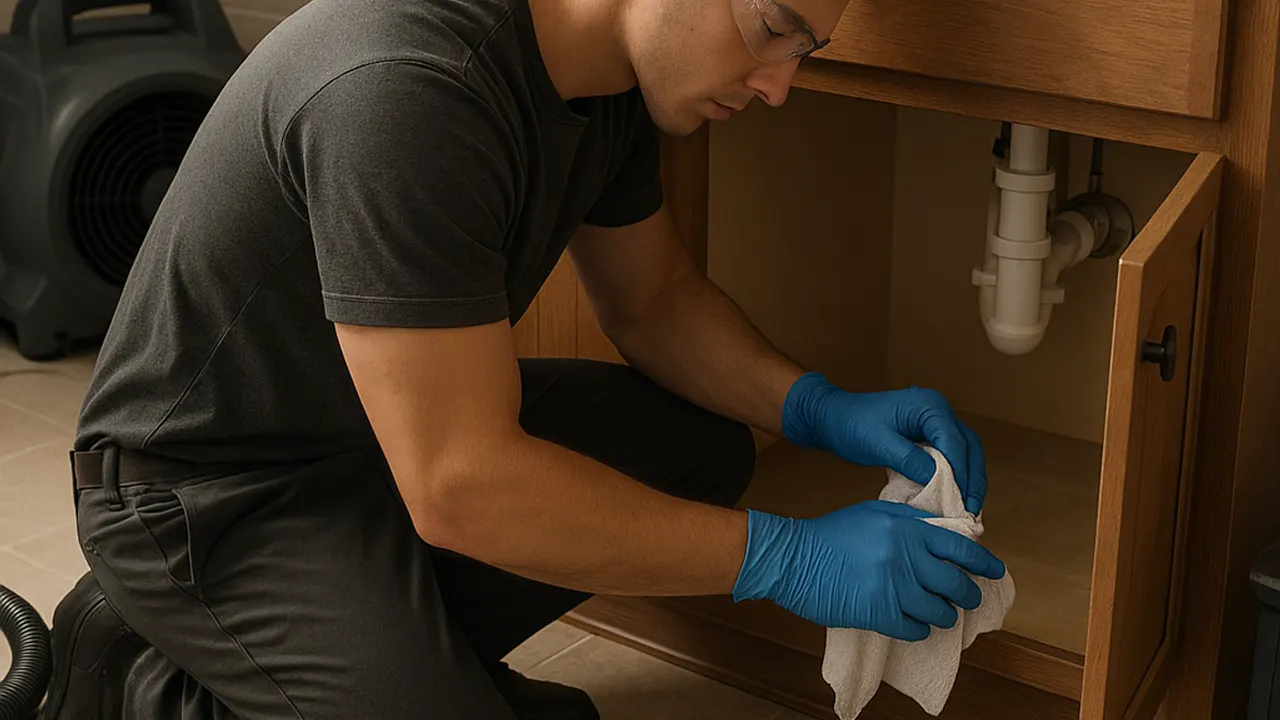
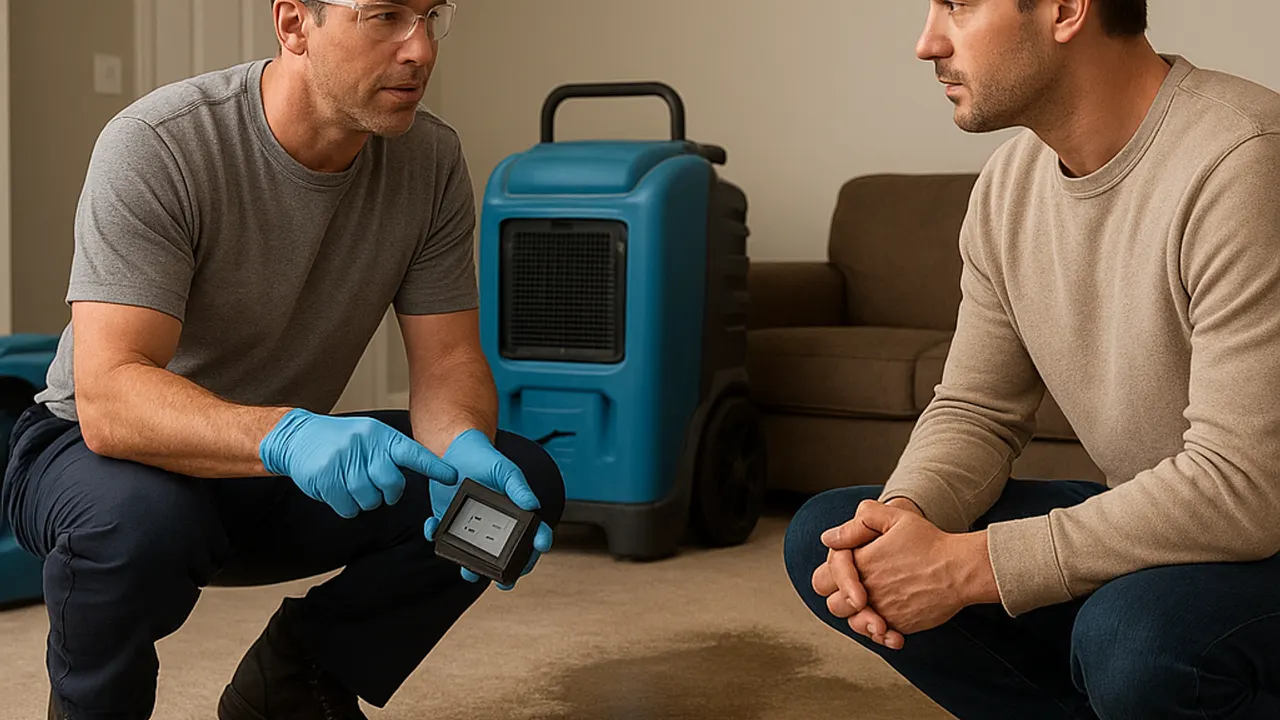
We check accessible affected materials with a moisture meter and explain where further drying attention is needed. Findings help separate visibly wet surfaces from hidden moisture that could otherwise be missed.
Next-step explanation
We discuss whether drying equipment, cleaning, disinfectant, selective material removal, or repairs are the next practical tasks. You leave with a clearer understanding of what pumping addressed and what remains.
Flood water removal Indianapolis IN: what the work involves
A plain-language look at what Flood Water Removal involves and when it is needed.
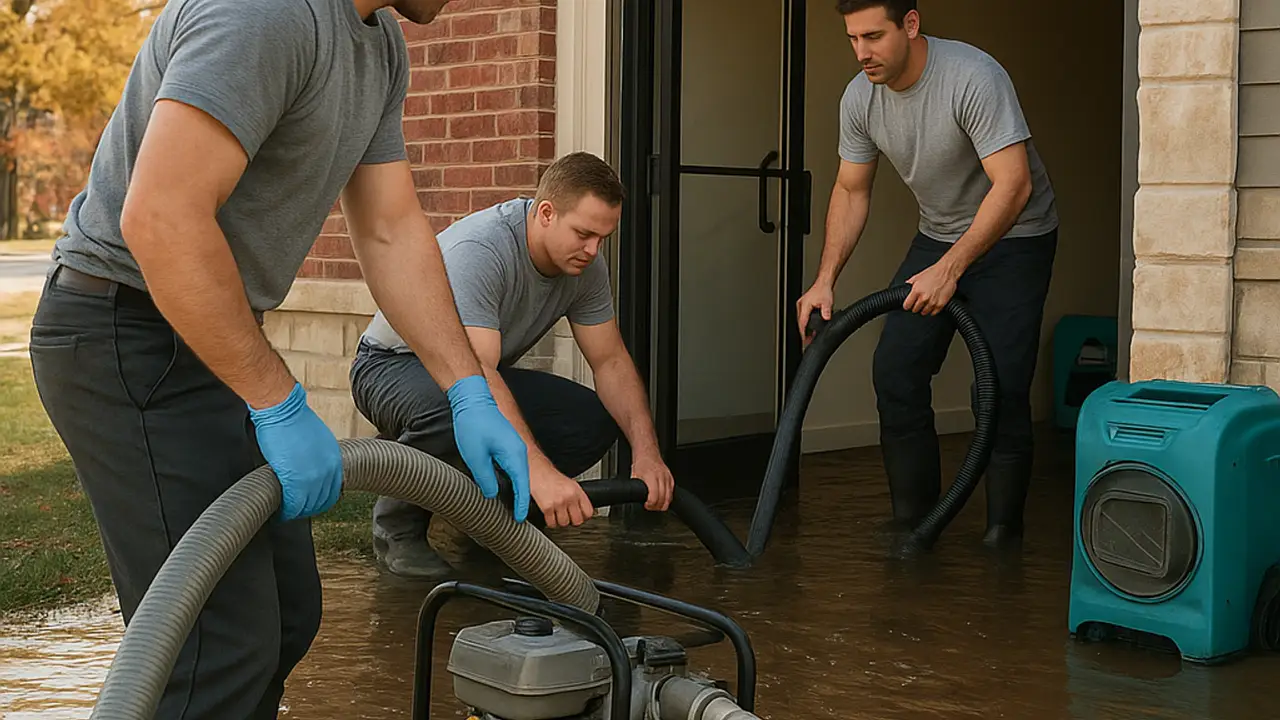
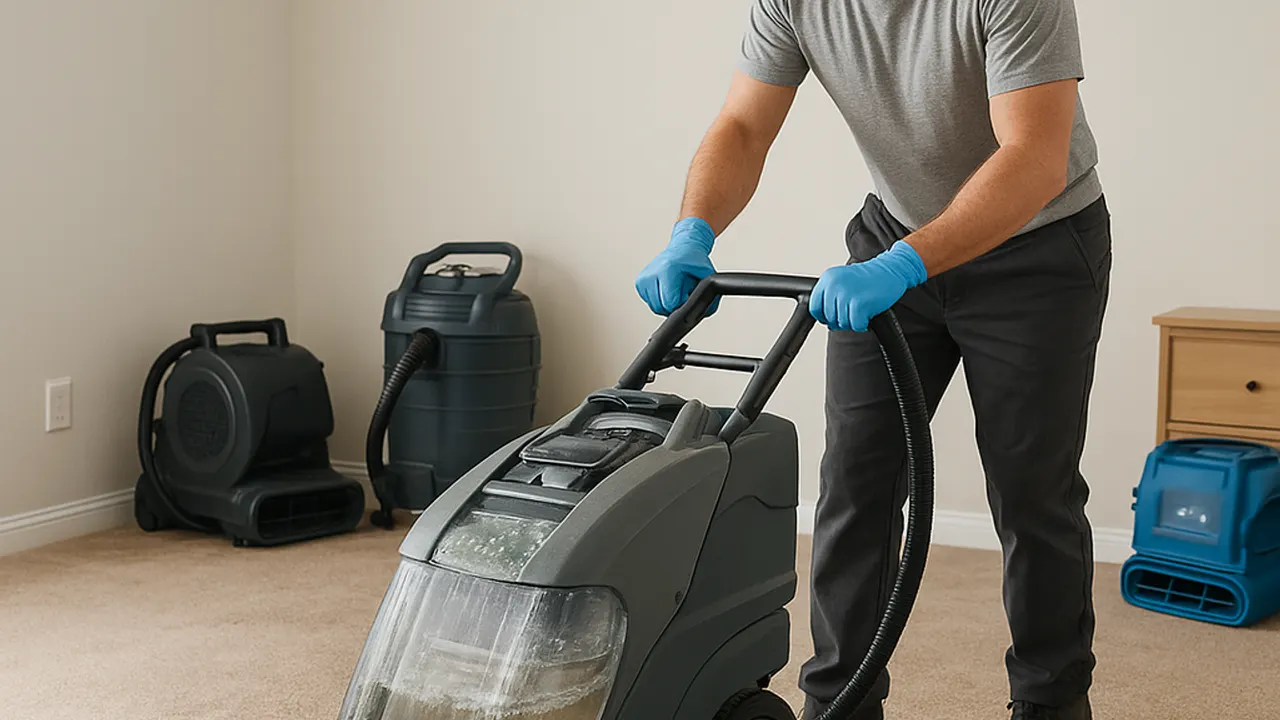
Flood water removal Indianapolis IN is an emergency water-removal service that pumps standing floodwater from buildings and affected spaces so cleanup and drying can proceed. We start by identifying the water source and checking safe access, then use a submersible pump or truck-mounted water extraction unit for bulk water. A portable extraction unit and wet/dry vacuum help clear remaining water from floors and carpet. We inspect water-damaged carpet, carpet padding, drywall, and baseboards because visible water rarely shows the full wet area. Pumping is the first stage, not a substitute for drying or repairs.
Indianapolis properties face flooding after heavy autumn and spring rain, snowmelt, basement seepage, burst pipe water damage, and sump pump failure. Older homes near Fall Creek and established neighborhoods may have finished basements where water travels beneath flooring or into wall cavities; commercial spaces can face broad floor-level pooling. Our Indianapolis flood water removal service addresses the immediate water and helps determine which materials need extraction, removal, or monitored drying. For emergency flood water removal Indianapolis IN, keep clear of water near outlets and let us know if the source is sewage or another potentially contaminated supply.
What to expect during removal
Floodwater extraction follows a practical sequence: assess the source, protect access, pump bulk water, extract residue, and check the materials left wet. We explain each stage before moving equipment through your home or workplace. A small room may be pumped in a few hours; larger or deeper flooding takes longer.
Assess the water
We begin with a walk-through of the flooded area and ask when the water arrived, where it came from, and whether it is still entering. We check depth, access, electrical concerns, and visible contamination. This first assessment usually takes 15 to 30 minutes for a straightforward room, and it determines which pump and extraction tools fit the job.
Protect and set up
We identify a safe route for hoses and equipment, protect nearby surfaces where practical, and keep people away from wet electrical areas. If power isolation is needed, we do not ask you to enter standing water to reach a breaker. You see where the pump will discharge and how we will move equipment before extraction begins.
Pump bulk water
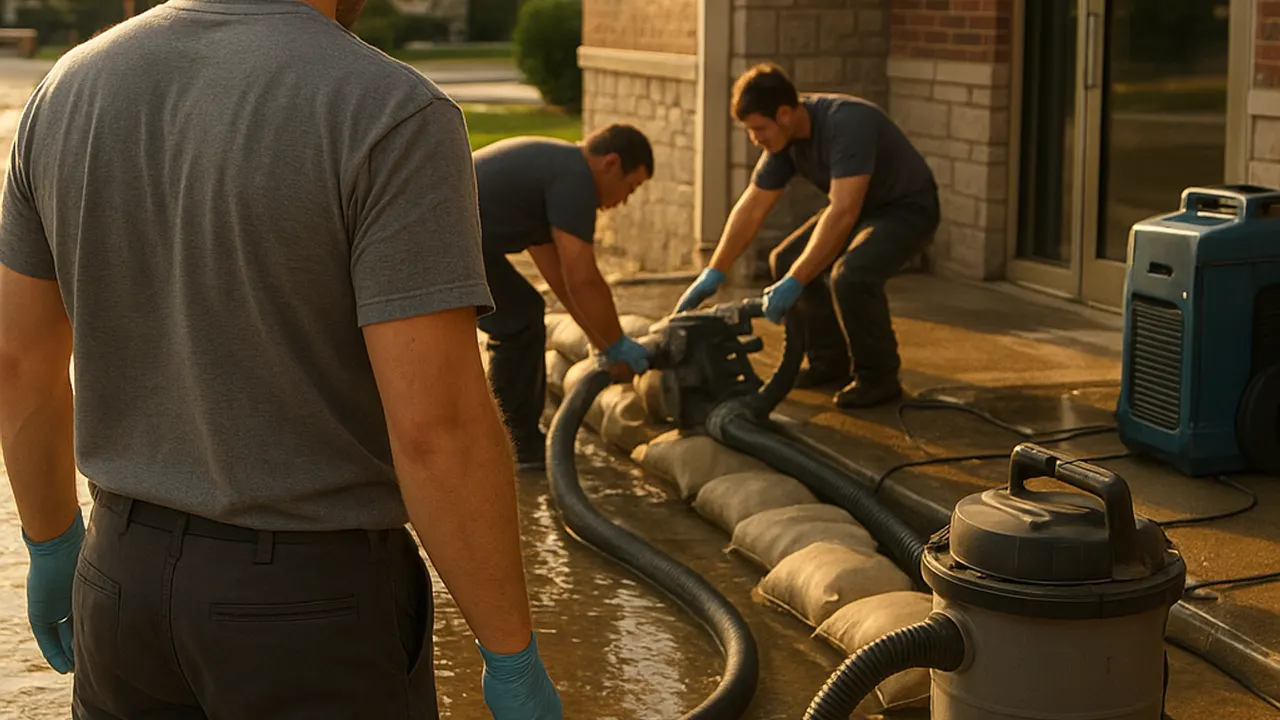
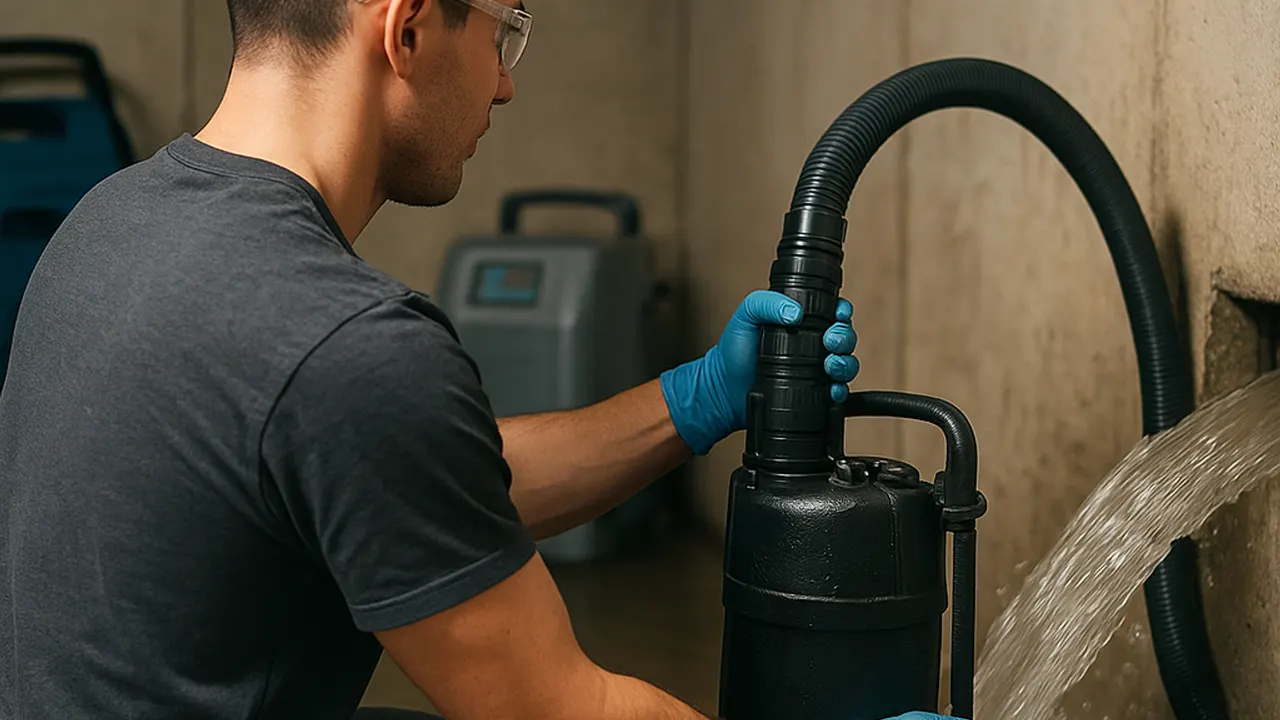
We use a submersible pump for deeper water and a truck-mounted water extraction unit when access and volume call for it. Pumping time depends on the flooded footprint and water depth; a few inches across a basement takes longer than a shallow utility-room spill. We monitor the falling level rather than leaving equipment unattended without checks.
Extract remaining water
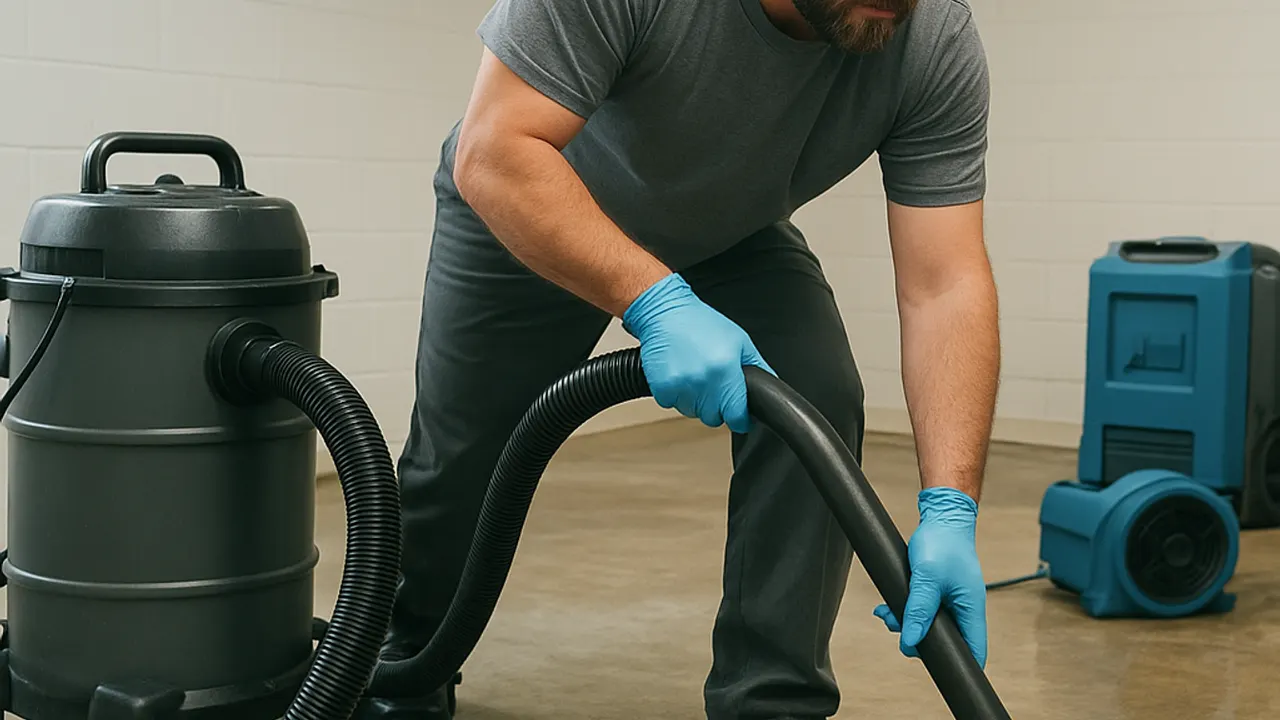
Once bulk water is down, we use a portable extraction unit or wet/dry vacuum to remove water from floor edges, carpet, and other accessible surfaces. We check carpet and padding saturation because a surface pass alone will not show how much water remains below. If materials are damaged beyond practical drying, we explain the removal decision.
Check and plan drying
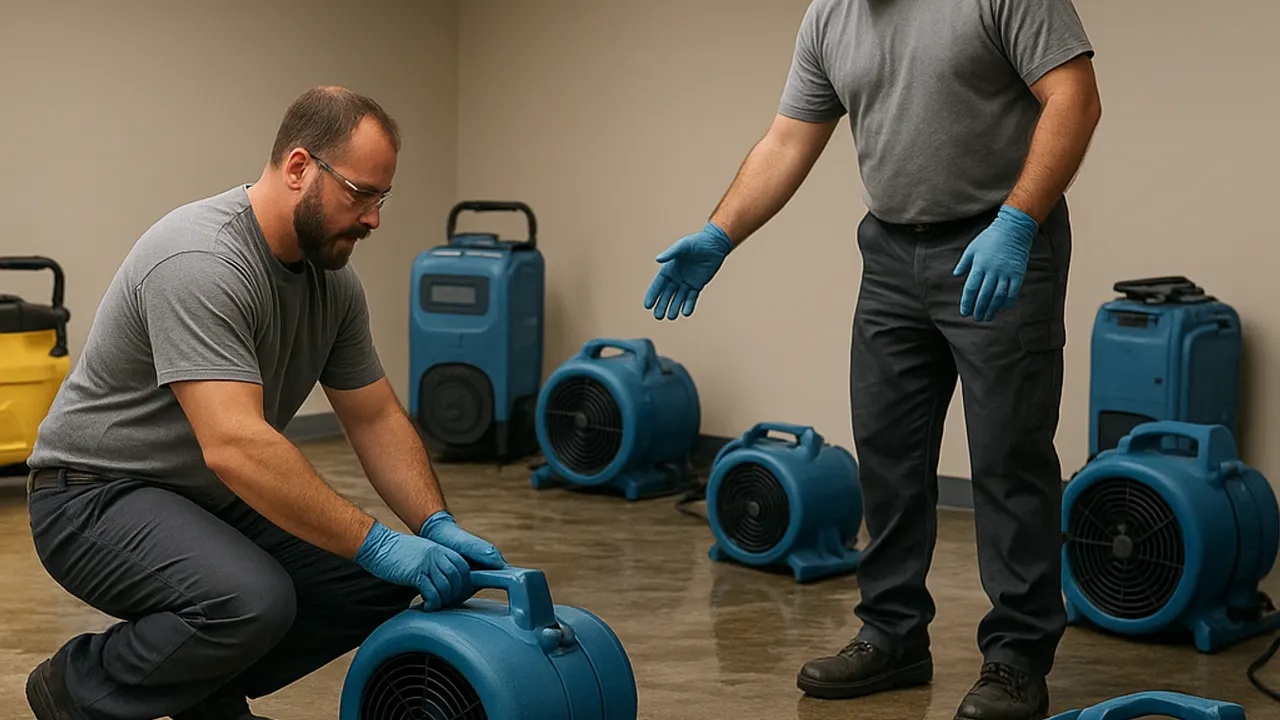
We check affected materials with a moisture meter and explain which areas need continued drying. Air movers and a commercial dehumidifier may be used as the next phase, with readings reviewed during follow-up. You receive a clear summary of the areas addressed and the next action for drying, cleaning, or repairs.
Equipment and field methods
Move across a circle, or focus it and press Enter, for an illustrative thermal view of the photograph.
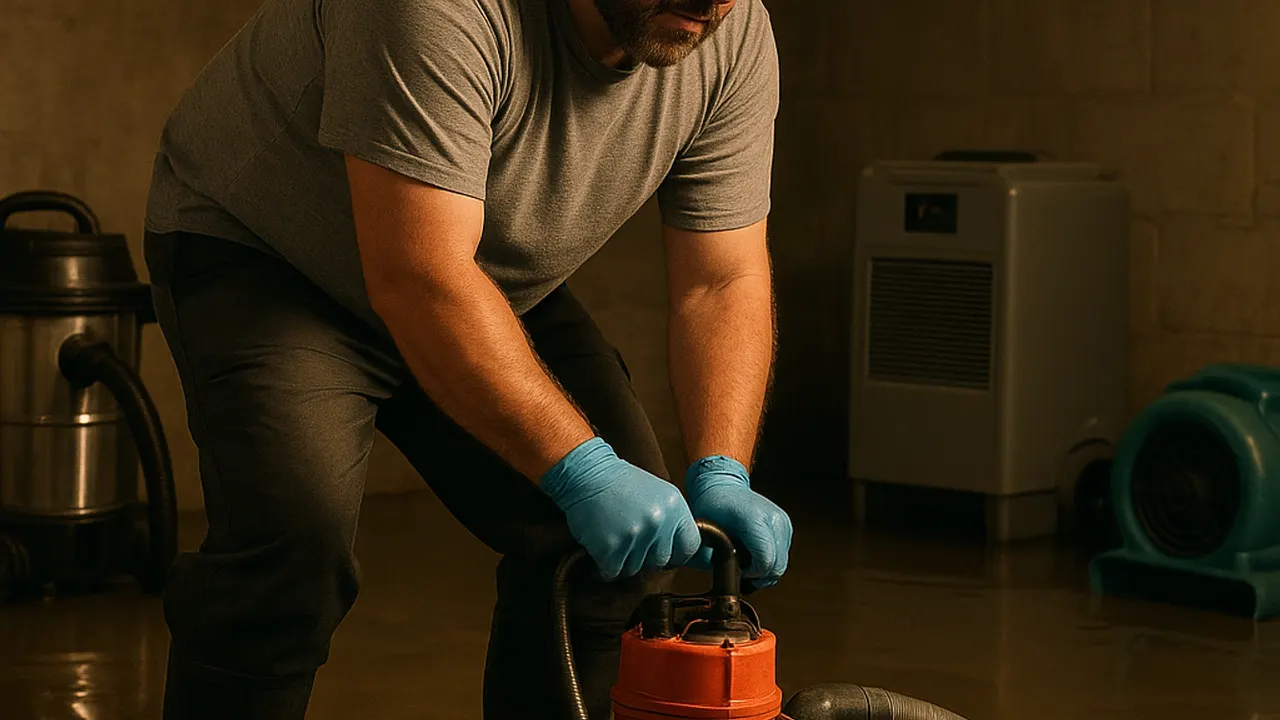
Submersible pump
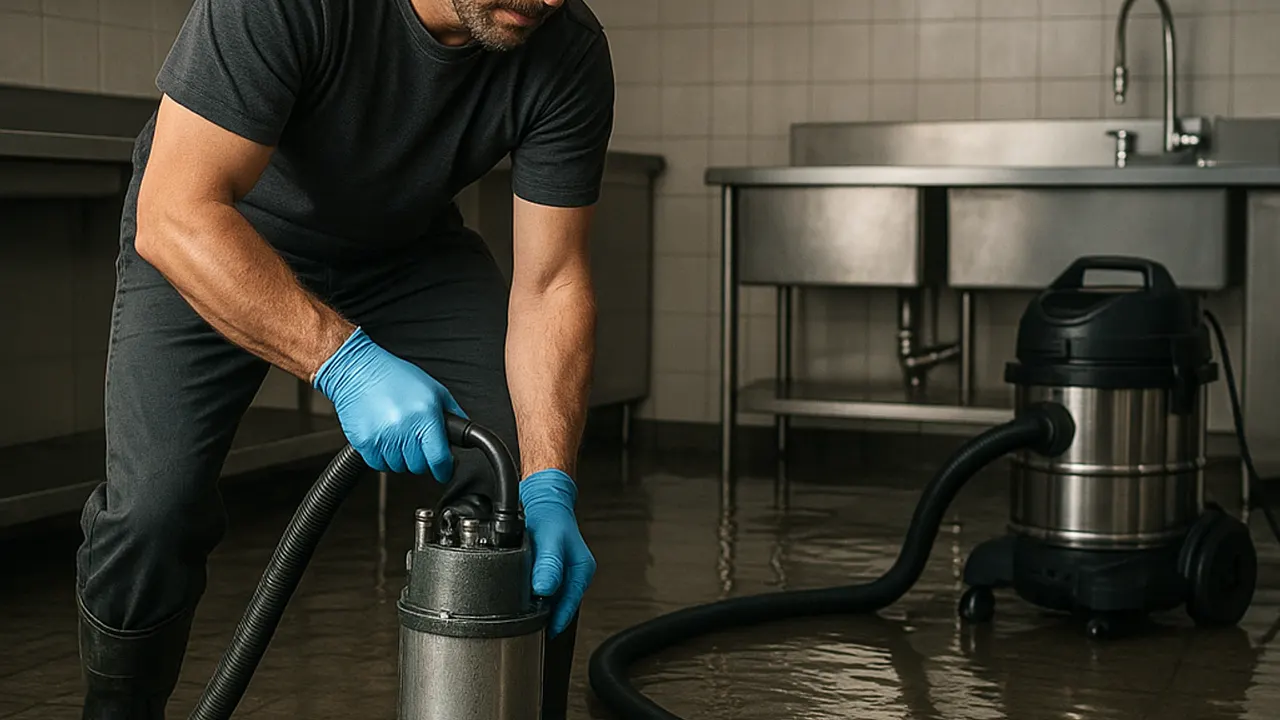
Removes deeper standing water from basements and low areas. We monitor the water level and reposition the pump as the pool shrinks.
Truck-mounted water extraction unit
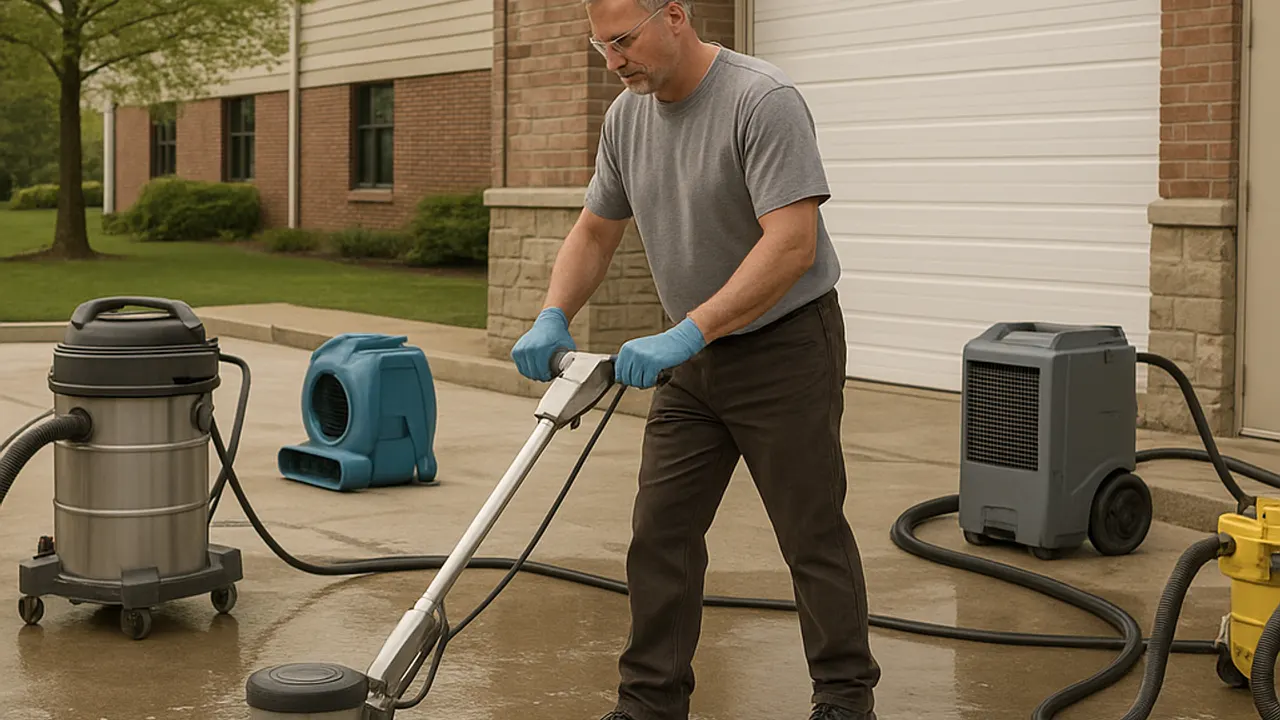
Provides high-capacity extraction for suitable properties with equipment access. We use it for bulk removal when the layout and volume make it practical.
Portable extraction unit
Targets water remaining on floors, carpet, and edges after bulk pumping. Its smaller setup helps reach spaces where a truck-mounted hose is not practical.
Moisture meter
Checks moisture in accessible building materials so we can identify areas that need continued drying rather than judging by appearance alone.
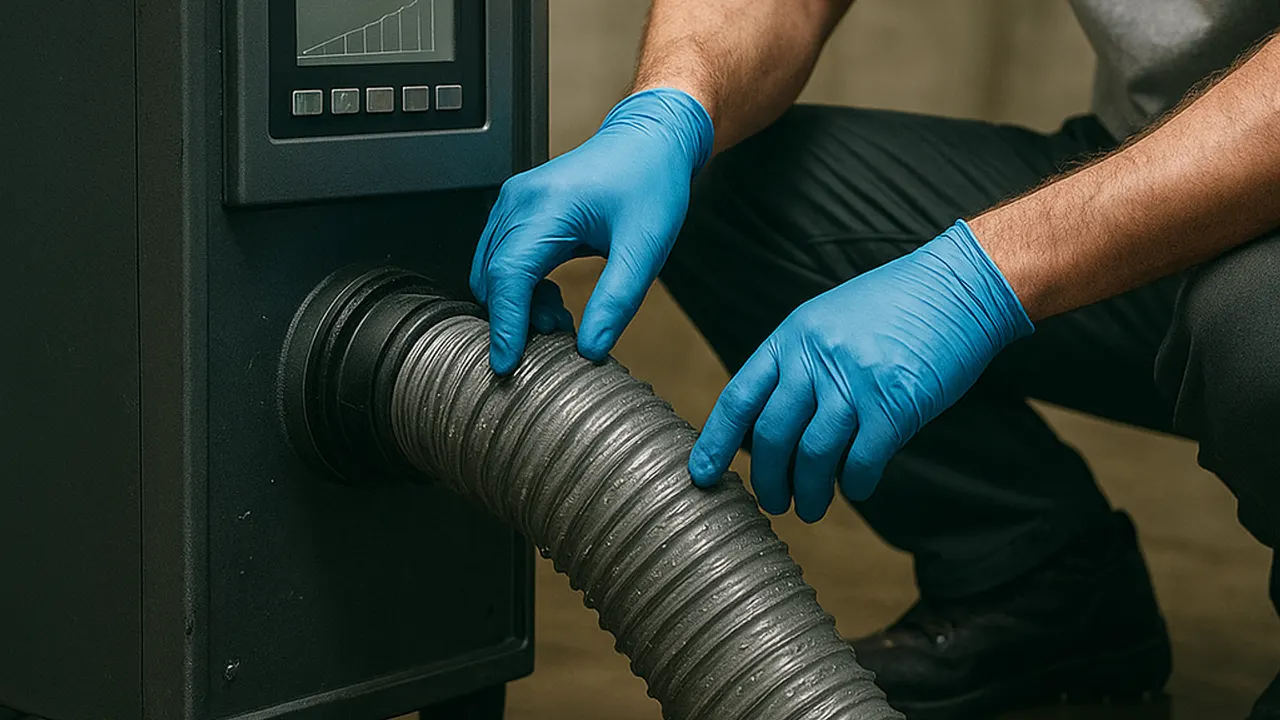
Commercial dehumidifier
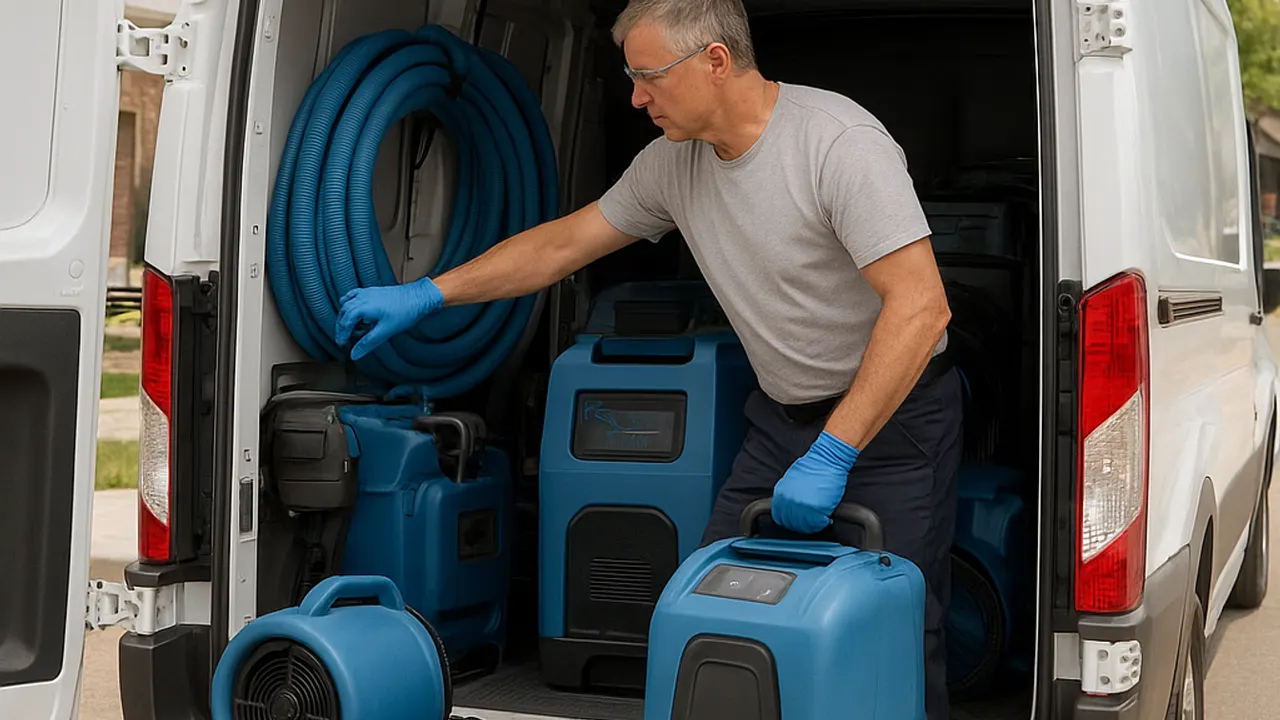
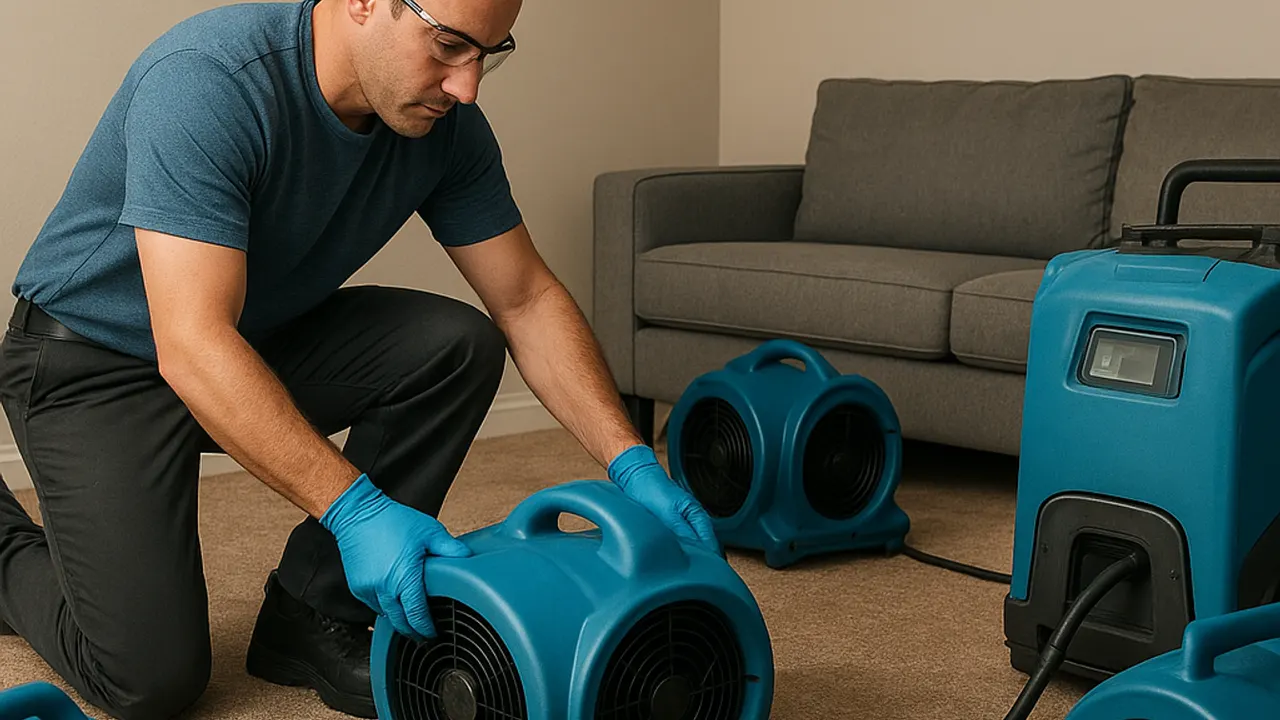
Supports the drying phase by removing moisture from indoor air after extraction. We use readings and material conditions to guide placement and follow-up.
Thermal views are illustrative, generated from the photographs.
Methods
ANSI/IICRC S500-informed assessment
We use the ANSI/IICRC S500 Standard for Professional Water Damage Restoration as a reference for assessing water intrusion and planning response. We consider the source, affected materials, and contamination concerns before deciding how to pump, extract, and identify follow-up work.
Staged water extraction
We remove deeper standing water first, then switch to detailed extraction as the water level falls. This sequence uses the right type of equipment for each stage and makes it easier to inspect floor edges and affected materials after the pool is cleared.
Moisture-guided drying checks
After pumping, we check accessible materials with a moisture meter and explain where drying should continue. Air movers and dehumidification belong to this next phase; readings help evaluate progress instead of relying on a dry touch or appearance.
When to call for flood removal
A heavy autumn storm sends rain through a basement window well in Meridian-Kessler.
We check the entry point, floor depth, and access route, then pump the basement and extract remaining water from reachable flooring. We inspect lower wall edges and identify whether carpet, padding, or stored materials need additional attention.
Outcome: The standing water is removed and you know which materials need drying or cleaning before the basement is put back into use.
A sump pump fails overnight in an Irvington home while rainfall continues.
We assess whether water is still entering and how much has accumulated before setting up a pump. We clear the accessible floor area, check the low points, and explain how the failed pump affects the next steps.
Outcome: The immediate pool is removed, and you have a clear handoff for sump repair and follow-up drying.
A supply line breaks behind a retail counter in Downtown Indianapolis before opening.
We coordinate the route through the work area, remove pooled water with extraction equipment, and check the counter base and nearby flooring. We explain what can be moved back after extraction and what needs more drying time.
Outcome: Staff can plan the affected area around actual water conditions instead of guessing from the dry-looking floor surface.
Water enters a commercial lower level near Mass Ave after a blocked exterior drain.
We identify the wet footprint, keep equipment access clear, and pump water from the affected floor. We check surrounding materials and discuss whether debris cleanup, disinfectant, or additional drying is required.
Outcome: The business gets the pooled water removed and a practical plan for restoring the lower level safely.
IrvingtonBroad RippleDowntown Indianapolis
How flood removal works in Indianapolis
Flood water removal Indianapolis IN has to account for storm patterns, property layout, and the route water took into the building. October brings autumn rain and falling leaves that can burden exterior drainage; winter freeze-thaw cycles and spring downpours create other basement risks.
Older homes in Indianapolis often have finished lower levels, mixed flooring, and tight stair access, while commercial buildings may have broad slab floors and stock near ground level. Our Indianapolis flood water removal service starts by checking the water source, depth, and safe equipment access before we pump.
A failed sump pump, stormwater intrusion, or burst pipe each changes how we handle the water and what materials need inspection. We work across Marion County and nearby Indianapolis neighborhoods, adjusting the setup for narrow entries, shared halls, or business operating hours.
Irvington: Older homes and finished basements can have narrow stair access, so equipment placement and hose routing need planning before extraction.
Broad Ripple: Basement entries and lower-level rooms can collect stormwater; we check floor edges and stored items as water is removed.
Downtown Indianapolis: Commercial lower levels and service corridors require a clear equipment route that avoids blocking essential building access.
Meridian-Kessler: Finished lower levels may combine carpet, hardwood, and drywall, each requiring a different moisture check after pumping.
Autumn leaves and heavy rain challenge exterior drainage: As fall progresses, clogged or overwhelmed drainage can send water through window wells, doors, and low foundation openings. We identify the entry route and remove pooled water while noting materials that need cleaning or drying.
Freeze-thaw cycles stress older supply lines: Cold periods can expose weak plumbing and lead to sudden leaks inside walls or lower levels. Once the source is stopped, we extract standing water and check nearby finishes for moisture migration.
IllustrativeThe thermal view is generated from the photograph. It is not a measurement. Drag the handle, or use the arrow keys once it is focused.
Rainwater in a finished basement
Before: A Meridian-Kessler homeowner found several inches of stormwater across a finished basement after rain entered through a window well. Carpet looked wet across the center, but water had also reached the wall edge and stored boxes. The family could not tell whether the room was ready for cleanup or whether water remained beneath the flooring.
After: We pumped the standing water, extracted the accessible carpet surface, and checked floor edges and lower drywall. The visible pool was removed in about three hours; moisture checks identified areas needing continued drying. The homeowner had a clear list of affected materials and a plan for moving items only after the drying stage.
Keep window-well drains clear before autumn storms and check the basement after heavy rain. Test the sump system regularly, and move stored items off the floor so a future leak is easier to spot.
Sump failure in a lower level
Before: During a storm, a failed sump pump allowed water to collect across a Southport basement floor. The water reached stored belongings and the bottom edge of drywall. The owner had stopped the immediate inflow but needed the pool removed before assessing what could be saved.
After: We set a submersible pump at the low point, removed the standing water, and used a portable extraction unit along the floor edges. The bulk water was cleared in several hours, while moisture checks showed where drying still needed to continue. The owner could separate salvageable contents from items exposed to water.
Arrange repair of the failed sump equipment and confirm that its discharge route is clear. Keep boxes on shelving, inspect the lower level after storms, and note any recurring damp areas for follow-up.
Retail back-room pipe leak
Before: A broken supply line left water across a retail back room in Downtown Indianapolis before staff arrived. Water reached shelving feet and the baseboards, and the operator needed a clear view of the floor before moving stock back into place.
After: We extracted pooled water from the room and checked around the baseboards and shelving. The floor was clear of standing water after roughly two hours, and the operator received guidance on the areas needing additional drying. Staff could plan reopening around the affected section rather than treating the entire back room as dry.
Inspect supply lines and appliance connections for drips, especially near stored stock. Keep the lowest shelf several inches above the floor and make sure staff know where to report water before it spreads.
Problems we solve after Indianapolis flooding
Floodwater does not stay neatly in the middle of a room. It moves under flooring, into carpet padding, and along wall edges while the visible pool shrinks. We focus on removing accessible water and identifying the materials that need follow-up, helping you avoid treating a damp room as recovered before the moisture has been checked.
Basement flooding leaves several inches across finished flooringWater can spread beneath laminate or carpet, soak padding, and reach lower drywall before the floor surface appears clear. Delayed extraction increases the area that needs drying. We assess water depth and the basement layout, pump the open pool, and extract remaining water at floor edges. We check accessible flooring and lower walls for moisture, then explain whether carpet or padding needs further drying or removal. If water is still entering, we discuss the source before treating the room as cleared.
Sump pump failure sends stormwater into a lower levelRainwater can continue to enter while the failed system sits idle, carrying debris and soaking stored items, insulation, and wall finishes. We identify the active water route and safe access, then remove standing water with a pump sized to the depth. We check the affected floor and lower wall areas and explain what requires cleaning or drying. You will also need to address the failed sump equipment so the same condition does not continue.
Burst pipe water damage reaches carpet and wall cavitiesWater from a broken line can spread quickly through carpet padding and behind baseboards, leaving hidden dampness after the visible spill is gone. Once the source is stopped, we extract the pooled water and check nearby carpet, baseboards, and drywall. We use moisture readings to identify areas that need continued drying, and explain where selective removal may be needed to reach trapped moisture.
Stormwater intrusion leaves debris and standing waterRain entering through a basement opening or ground-level doorway may leave sediment and contaminated residue that ordinary household cleanup does not address. We assess where the stormwater entered and whether debris or contamination is present before pumping. We remove accessible water, identify surfaces needing cleaning or disinfectant, and separate extraction from any follow-on restoration. If conditions indicate a health or electrical hazard, we keep the work area clear until it is safe.
Practical results after a flood
Floodwater causes more than a wet floor: it can soak padding, wick up drywall, and reach stored belongings before the source is obvious. We focus first on removing accessible water, then explain what needs drying, cleaning, or a separate repair. You get a clear sequence of work rather than a pump left running without checking the materials around it.
Bulk water out sooner
A submersible pump moves deep standing water far faster than towels or a household vacuum. We match the equipment to water depth and access, then switch to extraction tools as the level drops. That reduces the time water sits against flooring and gives you a usable view of the affected rooms.
Hidden wet areas identified
Water can travel under laminate flooring, carpet padding, and behind baseboards. We use a moisture meter to check accessible materials and mark areas that need drying attention. This helps you understand why a room that looks nearly dry can still require air movement or selective material removal.
Safer work decisions
Floodwater near electrical equipment, fuel, or sewage requires caution before pumping starts. We ask about the source and inspect the work area before bringing equipment inside. If you suspect a live electrical hazard, stay out of the water and contact the appropriate emergency utility or electrician before entering.
Clear next steps
After extraction, we explain what remains: drying, disinfectant application where appropriate, or repair of damaged finishes. We record affected areas and readings so you can coordinate follow-up work. Flood cleanup Indianapolis IN is easier to manage when pumping, drying, and reconstruction are treated as distinct steps.
Field knowledge and sound methods
Water Pump Masters handles floodwater removal across homes, basements, and commercial properties in Indianapolis. We use the job conditions-not a one-size-fits-all checklist-to choose between pumping, surface extraction, and monitored drying.
We identify the source, water depth, affected rooms, and access before selecting a pump or extraction unit.
We check flooring, baseboards, and wall edges for moisture migration beyond the visible pool.
We use moisture readings to guide drying checks rather than relying on touch or appearance alone.
Service ZIP codes.
A list like this tells people straight away whether you cover their street. Not listed? Call and ask: it only takes a minute.
A small room with shallow water often takes two to four hours to pump and extract; larger or deeper flooding takes longer. We first check the source, water depth, access, and safety, then select the equipment. Drying continues after visible water is removed and may take several days, depending on materials and readings. Call 317-792-8700 with the location and approximate water depth so we can understand the immediate work.
Flood water removal includes pumping and surface extraction; drying, disinfecting, and repairs depend on the affected materials and water source. We remove bulk water with suitable pumps, then use extraction tools for accessible residue and check moisture in nearby materials. Flood cleanup Indianapolis IN can also involve cleaning or removal of water-damaged carpet, padding, or drywall. We explain which stage is underway and what additional work the property needs.
Water Pump Masters handles emergency floodwater extraction near me in Indianapolis; call 317-792-8700 and describe the water source and location. Our team will ask whether water is still entering, how deep it is, and whether the area has electrical or contamination concerns. If water is near live electrical equipment, do not enter the flooded space. We can discuss the immediate extraction steps and what information will help on arrival.
The main factors are water depth, floor area, equipment access, water category, and whether drying or material removal is needed. We explain the expected work and price before proceeding; a phone description helps narrow the likely scope, but the actual site conditions determine the final amount.
Standing water keeps spreading into materials the longer it remains. Call Water Pump Masters at 317-792-8700 and tell us what flooded, how deep the water is, and whether it is still entering. We will discuss the next step for your Indianapolis property.
Call 317-792-8700 to describe a leak, flooded basement, or water-soaked floor and get connected with an independent service company. Share your Indianapolis neighborhood, the water source, and whether the water is still spreading. Hours vary by company, so call to discuss urgent needs and the next practical step.