
How to dry carpet after water damage in Indianapolis
Learn how to dry wet carpet safely after a leak or flood in Indianapolis, including what to do first, how long drying takes, and when carpet needs replacement.
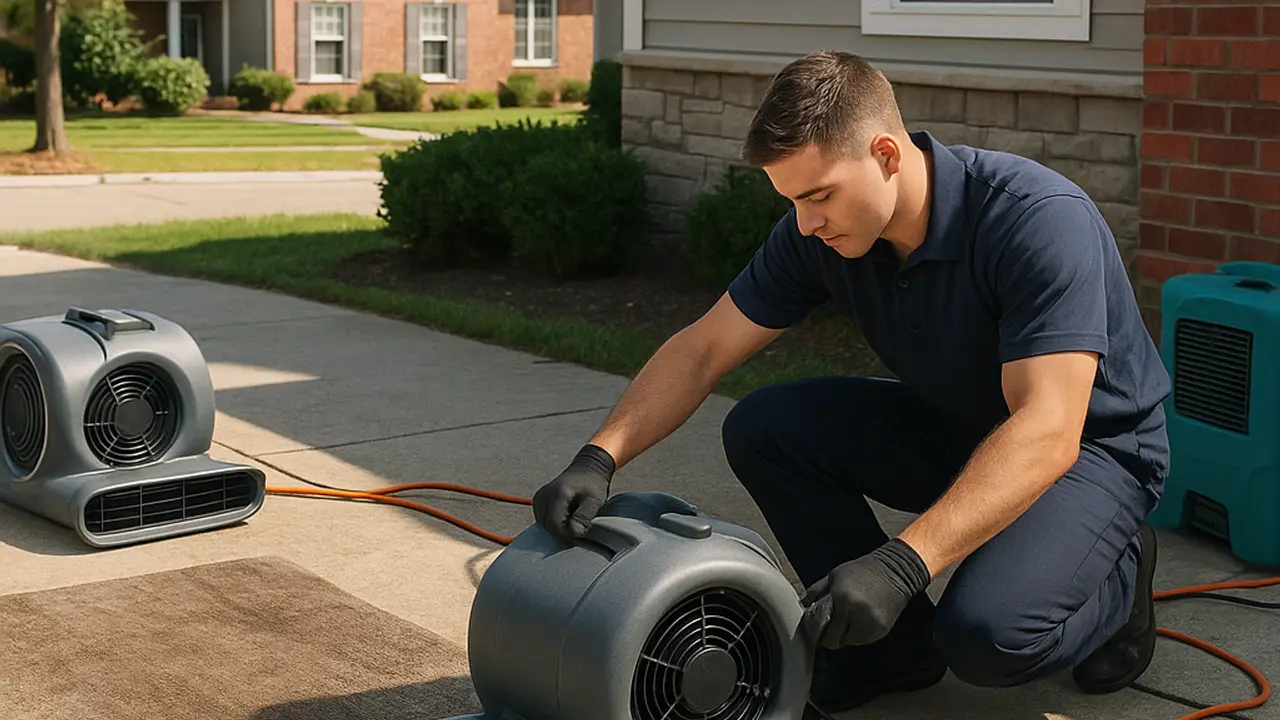
To dry carpet after water damage in Indianapolis, stop the water source, remove standing water, lift the carpet if the pad is saturated, and run fans with a dehumidifier until both layers are dry. Start within 24 hours; carpet that stays wet beyond 48 hours faces a greater risk of odor and microbial growth. This guide explains safe first steps, realistic drying times, and when to save or replace carpet and padding. Indianapolis rain, freeze-thaw weather, and basement seepage make quick action especially important. If the water came from a drain, sewer, or outside flood, do not treat it like a clean plumbing leak.
How to dry carpet after water damage in Indianapolis is a practical water-damage response method that removes moisture from carpet, padding, and nearby materials before lasting damage develops. At Water Pump Masters, we help homeowners get water out and determine what needs drying or removal. Our Emergency Water Extraction Indianapolis IN service starts with the source and the amount of water, not just the wet surface.
How do you dry carpet after water damage in Indianapolis?
Drying water-damaged carpet in Indianapolis starts by making the area safe, stopping the leak, and extracting as much water as possible before adding airflow. If the water is clean and the wet area is small, you can handle initial extraction while arranging help for saturated padding or a large spill.
First, shut off the supply if a pipe or appliance is leaking. Avoid the room if water has reached outlets, extension cords, or electrical equipment; turn off power to the affected area only from a dry, safe location. Never step into standing water if you suspect an electrical hazard.
For a small clean-water spill, use a wet-dry vacuum rated for water, not a household vacuum. Make slow, overlapping passes, then press clean towels into the carpet to draw out more moisture. Keep doors open and move furniture onto plastic or foil blocks so wet dye or wood does not stain the carpet.
Set a dehumidifier to run continuously and direct fans across the carpet surface, not so close that they disturb fibers. Aim for indoor relative humidity below 50% and keep the room near 68-75°F if practical. Do not use a heater, hair dryer, or open flame to speed the process.
Why carpet and padding need prompt drying
Carpet and padding in Indianapolis homes need prompt drying because water can travel through the pile and remain trapped against the subfloor. A carpet that feels dry on top can still have wet padding underneath, especially in a basement or room with thick cushion.
Padding acts like a sponge. A 10-by-10-foot room holds 100 square feet of carpet, and a few gallons of water spread across that area can soak the cushion even when there is no visible puddle. Moisture can also reach tack strips, baseboards, drywall, and wood subfloors.
Drying within 24 hours is a useful target, not a guarantee that every material is safe. The source matters: water from a clean supply line differs from water that has contacted soil, a floor drain, or sewage. Do not reuse fans from a contaminated area in clean rooms.
Indianapolis neighborhoods have a mix of older homes and finished basements, where carpet may sit over concrete or older wood flooring. In Emergency Water Extraction in Irvington, a basement leak can leave moisture hidden behind baseboards and beneath carpet even after the visible water is gone.
How to remove water from flooded carpet safely
To remove water from flooded carpet safely, identify the water category, extract surface water, and decide whether the carpet and cushion need to be separated. Do not start cleanup if the water is sewage, floodwater, or contains chemicals; keep people and pets out and call for trained extraction.
For a clean-water leak from a supply pipe or appliance, these steps help limit damage:
- Stop the leak and document the room with photos before moving damaged items.
- Use a wet-dry vacuum in repeated passes; empty its tank before it becomes full.
- Remove wet rugs and furniture, and check the carpet edge for water beneath it.
- Lift a carpet corner only if you can do so without tearing it or contacting contaminated water.
- Run fans and a dehumidifier, then check the carpet, pad, and subfloor with a moisture meter.
Do not pour disinfectant, bleach, or scented cleaner into the carpet. These products do not pull water from the pad and can damage fibers or leave residue. For widespread water, a truck-mounted or high-capacity extraction unit removes far more moisture than towels or a small shop vacuum. Our Carpet water extraction Indianapolis IN service focuses on removing water from the carpet system, not merely drying its surface.
If water came from a basement drain or a storm that pushed runoff indoors, keep the affected carpet out of use until the source and contamination risk are addressed. Floodwater can carry debris and microorganisms. Porous materials that absorbed contaminated water are often removed rather than dried in place.
How long does wet carpet take to dry?
Wet carpet in Indianapolis takes about 12-24 hours to dry after professional extraction under favorable conditions; carpet with wet padding often needs 24-72 hours or removal of the cushion. Temperature, humidity, airflow, water depth, and the subfloor all affect the result.
A dry-feeling pile is not proof that the assembly is dry. Check the backing, pad, tack strip, and floor beneath it. A professional moisture meter can compare readings in affected materials with an unaffected area; repeated readings should fall toward the baseline rather than stay elevated.
Keep the dehumidifier running with doors and windows closed while mechanical drying is underway. Opening windows during humid or rainy weather can add moisture instead of removing it. Indianapolis can shift from cool, damp fall weather into winter cold quickly, so heating the room moderately and controlling indoor humidity matters.
Drying equipment needs room to move air. Position fans so air crosses the wet floor, and empty or drain the dehumidifier as directed. If the carpet still smells musty after 48 hours, the pad or subfloor may remain wet, or the water source may have contaminated the materials.
Common carpet-drying mistakes to avoid
Common carpet-drying mistakes in Indianapolis include leaving soaked padding in place, relying on a surface fan alone, and treating contaminated water like a clean leak. These shortcuts can make the room appear better while moisture remains hidden below.
- Waiting for the carpet to dry on its own: Indoor air alone rarely removes water quickly from dense padding.
- Using heat without extraction: High heat can damage fibers and does not remove trapped water.
- Closing the room around a fan: Without dehumidification, moisture can remain in the air and settle back into materials.
- Putting furniture back too soon: Wait until carpet and floor materials are dry; otherwise, furniture legs can stain or trap moisture.
- Ignoring the cause: A leaking appliance, pipe, sump pump, or foundation entry needs attention or the carpet will get wet again.
Another frequent error is keeping carpet that absorbed sewage or outdoor floodwater because the pile looks intact. Contamination is not visible in every fiber. When water quality is uncertain, avoid direct contact and have the materials assessed before deciding what can stay.
When to call a professional for carpet water extraction
Professional carpet water extraction in Indianapolis is appropriate when water covers more than a small spot, reaches the pad, comes from a contaminated source, or remains after initial vacuuming. Call promptly if you see water under baseboards, feel a soft or swollen floor, or cannot identify where the leak started.
Our team can extract water, assess affected materials, and set drying equipment based on the size of the loss. A Water damage inspection Indianapolis IN helps locate moisture beyond the visible carpet, including wall edges and adjoining rooms.
For a pipe leak, use a plumber to stop or repair the plumbing source; extraction addresses the water left behind. If the water came from rain or a failed sump pump, we can help remove the water and identify which carpet materials need drying or removal. Water Pump Masters handles emergency water extraction around Indianapolis, including homes where a basement flood has reached finished flooring.
Upfront pricing should be clear before work begins. The right approach depends on how many square feet are wet, whether padding is saturated, and whether the water is clean. We use those details to focus the response on the materials that need attention, rather than promising that every wet carpet can be saved.
Frequently Asked Questions
How do I dry carpet after water damage in Indianapolis?
Stop the source, remove standing water with a wet-dry vacuum, and run fans with a dehumidifier; aim to begin within 24 hours. Check the pad and subfloor, not just the carpet face. If water is contaminated, the room is broadly flooded, or the padding is soaked, keep people out and arrange professional extraction.
How long does it take to dry flooded carpet?
With thorough extraction, carpet can dry in 12-24 hours, while wet padding can extend the process to 24-72 hours. Humidity, airflow, temperature, and subfloor material change the timeline. If the carpet remains damp or smells musty after 48 hours, hidden moisture needs further investigation.
Can wet carpet be saved after a clean-water leak?
Yes, carpet can often be saved after a clean-water leak if extraction starts quickly and the carpet, pad, and subfloor dry fully. A small spill on the pile is easier to recover than water that soaked the cushion for a day or more. Contaminated water requires a different decision.
When should I replace carpet after flooding?
Replace carpet and padding if sewage or outdoor floodwater contaminated them, if materials remain wet beyond roughly 48 hours, or if odor and moisture persist after drying. Clean-water damage does not automatically require replacement. Have the pad and subfloor checked before reinstalling carpet or choosing new materials.
When should I call for professional carpet water extraction Indianapolis IN?
Call as soon as water reaches the padding, covers a large area, or comes from a drain, storm, or sewer. Professional extraction is also the safer choice if water is near electrical equipment or moisture has reached walls and adjoining rooms. Quick removal helps shorten drying time.
Get help with Emergency Water Extraction in Indianapolis
Water Pump Masters can remove standing water and help you determine whether carpet and padding can be dried or need replacement. Call 317-792-8700 for Emergency Water Extraction in Indianapolis.